

An analysis of the recent American Eagle x Sydney Sweeney ad
Even if you’re a marketer whose only screen time is doomscrolling for content inspo, you must have stumbled upon the recent American Eagle advertisement featuring Sydney Sweeney at least once. Whether it’s the ad itself or the varied reactions, responses, analysis, and memes surrounding it–this ad has truly been the talk for the past few weeks, more due to the controversy rather than the jeans themselves (which we’re sure are still quite decent).
For other brands, this advertisement is actually a learning opportunity when it comes to representation. Because, reality check: representation is an important feature which can make or break your market size. When you neglect representation, you risk your outreach capacity.
Let’s deep dive into American Eagle’s ad, the missteps we think it took, what competitors are already doing, and how we, as a small but passionate creative marketing agency, would do alternatively if we were given the same opportunity 🙂
Target Audience On Point or Missed Mark?
When Male Attention Becomes the Marketing Shortcut
The whole concept of the American Eagle ad revolves around showcasing Sydney Sweeney as this young, attractive, even stereotypical depiction of the standard of a hot American woman–long blonde hair, big blue eyes, highly idealised body shape, strolling around in a plain white shirt and AE jeans. Watching this ad would immediately make us understand that it’s meant to draw in the male audience in general (from hormonal teenage guys to those in their 30s and up).
But the question is: if the product being advertised is women’s jeans, are men really the target audience?
Our take? It’s a psychological attempt to attract a huge amount of male viewers, up to the point where they would discuss and converse about it in small talk with their friends. As a result, straight women will see all these men being all over Sydney Sweeney in the ad.
Psychologically, these women may be much more inclined to buy the jeans in hopes to emulate the same attractiveness portrayed in the ad. We see this in research–Hamilton (2023) argues that since men have been conditioned, both evolutionarily and socially, to select women based on visual traits, they are the default and often the direct target audience of sexually appealing advertising.
Even when the ad is aimed toward a female audience (which is true for AE’s women jeans ad), men are more likely to be receptive to it, and are undeniably part of the audience.
Appeal to the Young Female Market
Aside from men, the obvious target audience of this ad would be young white women (from teenagers, young adults, adults) as a demographic. But not just any young white women–from a psychographic perspective, it’s those who are driven by vanity–those longing to look pretty and perhaps are already having insecurity and self esteem issues that make them pursue that standard of beauty. This group of audience would be more easily swayed by ads showing a stereotypical pretty woman simply because they wanna be one.
An article by Krzymowski (2024) emphasises that this occurrence is especially common among youth, and the harmful effects of constant exposure to idealized images of unrealistic beauty standards are wide-ranging and severe.
The Psychology at Play
To recap, we’ve just established that the American Eagle x Sydney Sweeney ad has two strong candidates for their target audience: the male demographic (particularly those who fit under the ‘male gaze’ stereotype–we wouldn’t say all men but it’s perhaps still higher than 50% of them… And if you don’t believe it, click on the ad link and see how most of the comments come from them 😅) as well as young women who are self-conscious about vanity and aspire to a certain standard of beauty.
Analysing the audience is just the first part. Let’s look deeper into the psychology at play–because for a 2-minute ad, this sure has a lot!
Reverse Psychology and the Red Herring Effect
Very early in the ad we see a common reverse psychology trick: Sydney Sweeney says, “I’m not gonna tell you to buy these jeans.” This is a deliberate choice by the brand because when people feel their freedom of choice is being restricted, they may react by doing the very thing they are discouraged from to assert their autonomy–this is thus used in hopes to build intrigue and desire.
At the same time, there is a red herring psychological technique at play here. It’s easy to tell a jeans ad is using reverse psychology when the hot blonde model says she’s not gonna tell us to buy jeans! When viewers spot this, they may experience self-satisfaction at the initial observation and look no further. Any techniques used as the ad progresses is a lot less likely to be overanalysed and therefore double in effectivity.
The “Look at This Bomb Lady” Shots
Of course, we can’t discuss this ad without discussing the choice of putting Sydney Sweeney as the main focus. Throughout the video, we see shots of her looking attractive in the AE jeans.
The ad also intentionally focuses on her butt before hopping into the car, this further emphasises the vanity/beauty standard aspect that it’s pushing. And by closing up on her boobs–it’s AE’s way of saying, “Yes, we’re selling our jean jackets, but also look at her sexy sexy boobs, tanned white lady skin… This could be you!”
Sydney Sweeney, having both their jacket and pants in one outfit (and interestingly no shoes), also suggests that American Eagle is “your-one-stop-to-become-a-sexy-lady: shop. You don’t even need to wear shoes to look stunning and put together at AE.
And don’t forget the very intentional pause after she says “eye colour”–then immediately, a shot to her coveted blue eyes. This transition makes the audience more drawn, wanting to be more like her and live up to that standard of beauty.
Hypnosis-style Repetition
Anyone who hears the first few rounds of the clinical-style adult male voice (very trance-like, but also authoritative and reminiscent of narrator voices in the Cold War era) saying, “Sydney Sweeney Has Great Jeans” (not sure we spelled that right) would agree that it’s a deliberate use of repetition hypnosis. The giant sans serif text may read “SS Has Great Jeans”, but the visuals are sexy shots of Sweeney, which makes the voice sounds like it’s saying genes instead.
While a lot of opinions may arise from this creative choice, the genes/jeans double entendre really does make viewers focus on Sweeney’s ‘great genes’ (beauty, hotness and all that) while wearing AE jeans–further instilling the desire of the viewers to buy the jeans and be like her.
The choice of sans serif giant text with soft blue colouring, ultra-modern and highly popular among accessible fashion brands, also doubles the effectiveness of the hypnosis technique because (depending on your stance) it pushes the viewer into buying the jeans and/or pushes them towards the perspective that great genes belong to hot, blonde American girls.
The “American Dream” Identity Framing
Another interesting (and honestly pretty disturbing) thing to note about this ad is that it doesn’t just show Sydney Sweeney–it shows Sydney Sweeney framed in the typical ‘American Dream’ identity. She wears white tank and jeans, which, if we dig deeper (and you know we did!), symbolise freedom and patriotism during World War II, but also masculinity tied to American toughness.
This outfit is reminiscent of Old Hollywood from the 1950s-70s (Marlon Brando, James Dean, Steve McQueen)–but with a female wearing it? It leans strongly into saying that in the good old days for Americans, things were simpler, cars were better, women were hot and patriotic. Especially since all this patriotic imagery is immediately followed with the male sound clip again.
So, what’s the ad trying to say? Pretty women have blonde hair and blue eyes–just like the old days, when we weren’t afraid to say it’s the only acceptable standard of beauty.
The outfit aside, we also have a note on the vintage car–the Shelby Mustang GT 350, to be exact, which Sweeney works under. She revs the engine and kicks up heaps of smoke. It resounds with the notion that old American cars are faster, stronger, and better looking. Altogether, this strengthens the ‘American Dream’ concept that the ad is implying.
Then vs. Now: How Brands Still Sell Jeans with Sex Appeal
American viewers might quickly pick up on the fact that this AE ad is heavily inspired by an old ad from Calvin Klein featuring Brooke Shields in 1980 (when she was just 15, so we know it’s not a useful learning moment there). It does have a lot of similarities, showing a sexy woman talking about genes while advertising about jeans.
The difference is that the Calvin Klein ad opens with a nerdy/smart looking woman who ends up being a sexy woman. This taps into the fantasy of many men–a woman who, on the surface, seems demure, perhaps submissive and compliant but as the ad progresses it’s shown that she can be this sexy wild woman as she takes off her glasses.
Also, it can also be appealing to the female audience. They don’t necessarily have to be ‘nerds’ in daily life, they may just be these shy, insecure, ‘average’ women that deep down also want to look/feel sexy.
Instead of moving around sexily like Sweeney, Brooke Shields struggles putting on jeans while talking, making audiences focus more on her and how weirdly sexy she looks when doing that. She also does a monologue on evolution, reaches the bit about “mating” when doing sexy poses: also spot on choice, and definitely not coincidental.
A smart marketing move which we’d give credits to CK (despite the disturbing ad of a 15-year-old girl) is how she does a bunch of intentionally weird poses, not only to appeal like a sexy woman but also showing their jeans are superior and comfortable enough to move around in. On the bright side, we’re a bit grateful that the AE ad doesn’t feature animalic poses that have fallen out of vogue due to the anti-feminist implications of pairing women with wild animals as seen in the CK ad.
In the Calvin Klein ad, though, we see Shields in gold instead of the white tank/jeans combo like Sweeney. The deliberate choice of gold pairs the brand with winning: it’s like saying the brand has won first place in the race of evolution against other brands, emerging as superior with the test of time.
She also wears a silky robe–heavily associated in pop culture with sex and further depicting her as a sexually approachable woman.
And when it comes to the ‘genes/jeans’ double entendre–Calvin Klein and American Eagle also have different takes. While Shields’ verbal content discusses genes, connecting them to the evolution of CK as a brand, it still brings viewers’ minds back to sex with phrases such as ‘selective mating’ (exactly when she intentionally does a sexy pose).
Also, by saying certain genes/jeans fade away while others persist, she’s implying that both the high quality CK jeans and her sexiness will last forever–something not done in the AE ad. Smart phrasing such as ‘natural selection’, ‘survival of the fittest’, and ‘resulting in an entirely new species’ further emphasize that CK jeans are different: they are built to endure, and they surpass their competitors.
With American Eagle, we see that they don’t cover this much when talking about genes–they don’t relate the script to the quality of their jeans, and rely more on Sweeney’s visual attraction and other aspects of the video which appeal to the ‘American Dream’ aesthetic (cue the vintage car). In fact, only the first 30 seconds of the AE ad is used to explore the quality of their product, while the rest is dedicated to showcasing Sweeney’s genes.
In comparison, the entire Calvin Klein ad goes on for just 1.03 minutes, covering a lot of talk about relating the superior genes/jeans while also showing the sex appeal of the model.
What Worked (and Why)
Now that we’ve uncovered every psychological technique used in this ad, let’s move on to our take about what worked and what didn’t.
Entirely speaking from a marketing perspective, we believe the choice to use the double entendre on jeans/genes is intentional–and it’s smart, although it leans more towards cunning, if you ask us. This choice is like a wide-open door to virality via controversy, but at the same time, AE can maintain plausible deniability–because “Hey, it’s an ad about jeans, Sweeney wears their jeans throughout the video, and even the giant text right in front of your eyes says “jeans”–what did we do wrong?”
Also, the ending of the ad is worth mentioning: it’s revealed that she’s actually doing an audition for the ad. She’s shy, good-looking but down to earth–even nervous. For a few seconds, she stepped back from the hot girl role and became just like us, another hard-working all American woman looking to earn a wage. She had to earn this role just like any other red blooded American would have to. The audition room, looking slightly fabricated, means the creators want us to know that this clip was purposeful.
And once again… We hear the sound bite of the man. She has great genes–but also a ‘very real’ personality (which she notes is genetic earlier), and her personality is the way women should be. Before women got full of themselves and started showing off too much of their bodies.
What was the effect achieved through this? That subtle switch plays on relatability while reinforcing the “all-American girl” archetype despite the earlier hyper-sexualisation. This is actually another ad trick, tapping into powerful psychological strategies: aspiration and identification. Combining these reduces resistance. Viewers don’t dismiss her as “unrealistic” because the ad immediately reassures them that she’s human too, one anyone can attain to be like.
Where It Backfires: Intentional or Innocent?
Now to arguably our favourite part of this analysis: we’ve set the stage for getting to know what the ad is all about, the techniques used, but knowing all that, we should not neglect a crucial discussion: the exclusionary identity framing (alienating, even), and what it may mean for AE as a brand.
Our take? AE knows full well what they’re doing when they decide to go with this ad. They know it’s gonna be obscurely offensive and feel insensitive but at the same time they have established how they can maintain deniability. They also surely know controversial ads will be watched and talked about more often than ‘normal’ ones. Also, People who watch it (mostly Americans) may understand the callback/similarity to the old Calvin Klein ad.
Now here’s where it gets problematic: AE’s market isn’t just white American women. A quick fact check lets us know that Americans actually only make up 57% of their audience demographics, while the rest? It consists of black (13%), Hispanic (12%), Asian (10%), and other ethnicities.
So, while this ad has used a lot of techniques that make it super effective in selling the ‘American’ identity, it’s also likely to push excluded people away from your brand. It’s like sending these alienated groups (which almost make up half of their target audience!) to any other jean brand that sells a desirable identity that could be them.
Even from an ethical perspective, watching this ad may push gullible young women into dyeing their hair, wearing eye contacts, getting plastic surgery or some other means–anything that makes them feel ‘beautiful’ like how the ad depicts Sweeney.
How Competitors Brands are Responding
Sometimes, we wonder if the AE marketers saw it coming–how they’ve created an excellent and easy branding opportunity for their competitor brands in the fashion industry. Within days of this ad’s release, rival brand Old Navy has come up with a wholesome campaign showcasing their denim with a strong focus on inclusivity. Featuring the caption, “These are the jeans your other jeans warned you about,” this ad shows smiling families and diverse models, with a focus on fits for “all”.

Also worth a shoutout is the Abercombie and Fitch ad which chooses another direction: plus-sized women and the importance of a well-fitting pair of jeans, and emphasizing confidence rather than physical appearance. (See? It’s heartwarming when brands uplift women, instead of encouraging them to keep appeasing the male gaze).

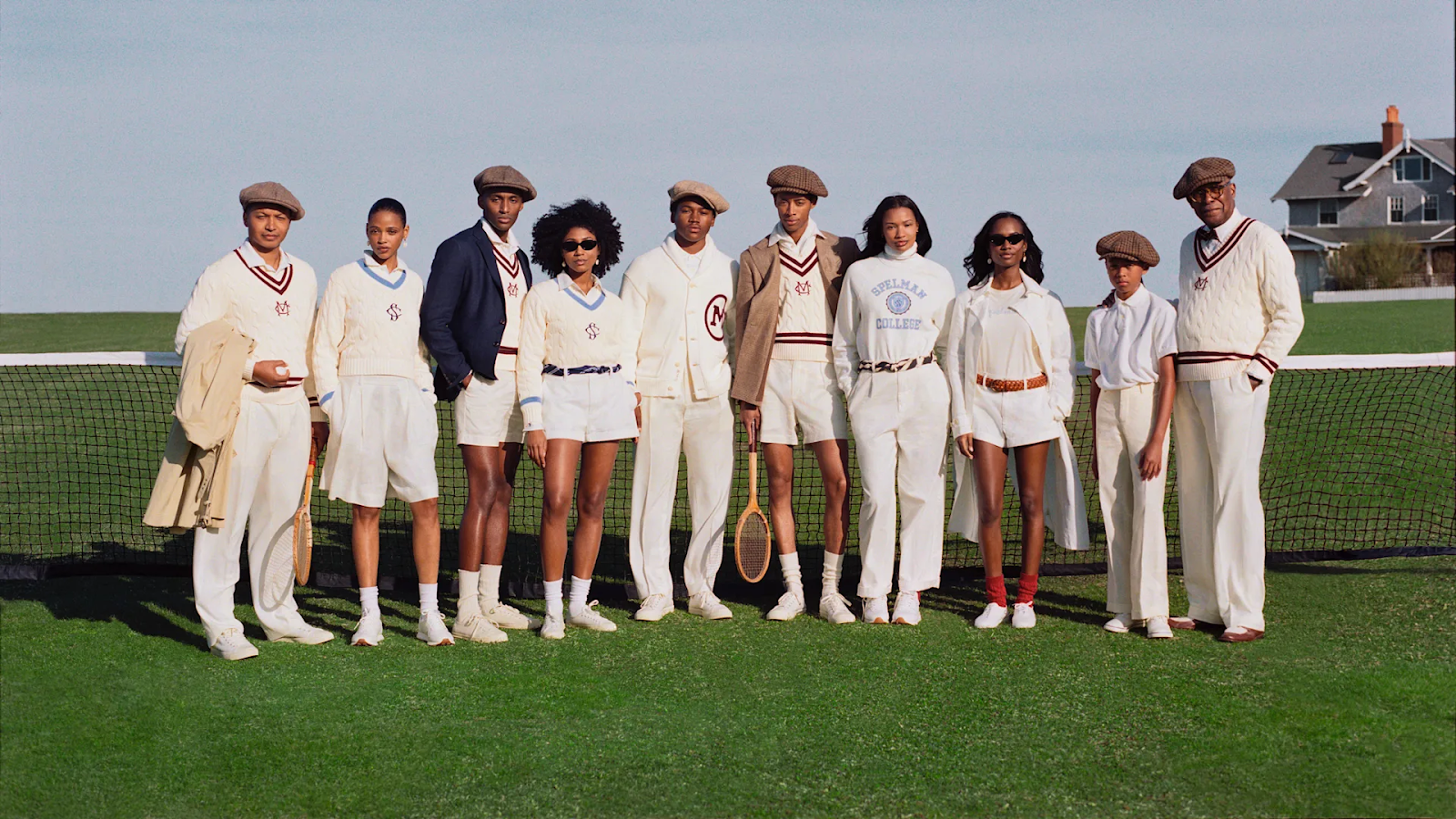
Ralph Lauren also celebrates heritage and culture, pairing their renowned luxurious old-money aesthetics with a comforting dose of nostalgia, culture, and community in Oak Bluffs: a nod to the intersection of Black history and Americana.
How We Would Blow This Up (In a Good Way ;))
As for us here at Garaj? Well, while we humbly admit that we haven’t got the chance to work with high-end jeans fashion brands until today (but who knows, right?), we thought it’ll be cool to share how we would do a campaign like this our own way. And no, we wouldn’t lean on reverse-psychology hypnosis tapes paired with Aryan beauty standards that turn into a subtle rage bait, promise! 😉
Pitch 1: Good American Jeans Come in All Shapes and Sizes
Think a sexy dark skinned woman in blue jeans fixing a vintage car, Megan Fox in Transformers type framing. She calls out in a sexy but non-chalant voice: ‘Hey, could someone pass me a wrench?’. A sexy woman with Korean features rolls out from under the car’s body, camera pans up her body, she wipes some dust from her face. Pulls a wrench out of her very defined jean butt pocket and hands it to the darkskin woman. Big white neon sign with red and blue outlines flickers on the back wall of the garage: ‘Good American Jeans Come in All Shapes and Sizes’.
Still ‘American Dream’, still patriotism/lets make the men want you, but attainable. And yes, they’re both wearing jeans.
Pitch 2: Jeans for Your Every Day
Now, how about the same one woman show concept as the Sweeney ad–it’s just one woman as the main frontrunner, we don’t really mind the looks. She doesn’t have to be this unrealistically beautiful goddess, she doesn’t even have to be sexy or curvy–just, effortlessly chic but in a real-life way. She’s just going about her day in this super comfortable and versatile pair of jeans she wears everywhere–morning coffee, to walk her dog, to work, to get groceries, even winding down at a low-key dinner with friends or lazing on the couch catching up on some TV without changing because she’s too exhausted.
The message would be how these jeans are comfortable enough to be worn throughout the day, even with your busy schedule. A text in sans serif font appears towards the end: For everything you do, and everywhere you are—good jeans fit right in.
Pitch 3: It’s Not About the Jeans (Or Is It?)
Parody-style ad of the American Eagle one. The scene opens like what viewers expect to be another stereotypical sexy jeans commercial: slow-mo hair flip, close-ups of lips, sultry walk down the street. Maybe even a random male voiceover murmuring something like “She’s got great…”
Then, a record scratch sound effect as the camera zooms out and we see our main woman looking directly into the camera: “Relax, I’m just talking about these jeans.” From there, the ad flips tone. She’s cracking open a soda, sprinting for the bus, sitting cross-legged in the office, laughing with her friends at a food truck. Totally normal, fun, and real moments, bringing motion and real-life messiness to the jeans instead of just posed perfection.
So, TL;DR? Representation Matters
And not just because it’s ‘the right thing to do,’ but because it’s the smart thing to do. If your ad only sells to one group of people, you’re missing the bigger picture and potentially a lot of ground for an untapped market. (Also, you’re gift-wrapping a fresh opportunity for your competitors’ Christmas sock!).
Learning from the American Eagle ad (also the Calvin Klein one), and how other big brands have clapped back: great jeans and great products need to fit everybody… and that’s where the real win is.